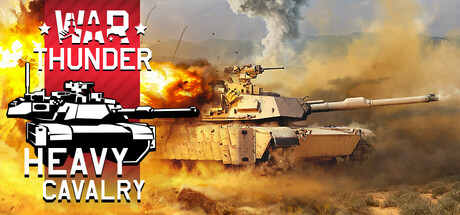
War Thunder looks simple on the menu screen: pick a nation, pick a vehicle, queue up. Then you're dead in eleven seconds because a plane you never spotted strafed your tank from a direction the game never warned you about. That's the real onboarding curve here — not the tutorial, but the first fifty matches. This guide covers the decisions that actually matter early: which nation to grind, how to survive Rank I-III, and how to avoid the notorious mid-tier wall that makes players quit.
Pick a starter nation for the tech tree, not the flag you like
War Thunder splits progression into separate tech trees for the USA, Germany, USSR, Britain, Japan, China, Italy, France, Sweden, and Israel, each with its own vehicles across ground forces, aviation, and naval. You don't need to pick "the best" nation — you need to pick one you'll actually finish learning before jumping to a second.
Germany and the USA are consistently the two recommended starting points for new players, and for good reason. Germany's early tanks and planes have forgiving armor layouts and predictable gun performance, which makes it easier to understand why you died instead of just seeing "destroyed" and guessing. The USA, alongside the USSR, offers one of the deepest and most balanced tech trees, so you're never stuck with a genuinely bad vehicle at a given rank.
Whichever you choose, commit to one ground vehicle tree first. Don't split research points across ground forces, aviation, and naval simultaneously — that's the single fastest way to end up under-teched everywhere and competitive nowhere.
Stay in Rank I–III longer than feels comfortable
The temptation in any progression game is to rush toward the shiny top-tier vehicles. In War Thunder, that's close to self-sabotage. Vehicles at Rank I through III are cheap to repair, cheap to crew, and matched against similarly inexperienced opponents. Higher ranks — especially Rank IV and V — throw you into matches with players who've mastered angling armor, leading shots on moving targets, and reading minimaps for flanking routes. If your fundamentals aren't there yet, you'll bleed Silver Lions on repair costs faster than you earn them.
Practical way to pace yourself:
- Finish researching and unlocking every vehicle at a rank before moving to the next one, not just the one you're currently flying or driving.
- Run daily tasks every session — they give compounding Silver Lion (SL) and Research Point (RP) bonuses that matter far more early on than one extra match played without them.
- Play Arcade or Realistic Ground/Air Battles in casual mode first. Casual modes show supporting indicators (lead markers, damage feedback) that help you internalize vehicle handling before Realistic strips those aids away.
Avoid the mid-tier grind wall
Most new players hit a wall somewhere around Rank III–IV: repair costs spike, enemy vehicles get noticeably better armor and firepower, and RP requirements for the next tier balloon. This is where a lot of accounts go inactive. A few things soften it:
- Don't skip premium/event vehicles if they're within reach — they often come with built-in crew skill bonuses or reduced repair costs that ease the transition to the next rank.
- Play vehicles you've fully upgraded (all modifications researched), not stock ones. A stock tank at the top of its rank is often worse than a fully modified vehicle one rank lower.
- Use Battle Tasks and nation-specific event modes for bonus RP/SL instead of grinding standard matches exclusively — the multipliers add up over a week of play.
Survival tips that actually change match outcomes
- Target weak points, not the whole vehicle. Learn where ammo racks, engine blocks, and crew compartments sit on common enemy tanks. A shot to center-mass armor often just bounces; a shot through a weak point ends the fight in one hit.
- Don't carry a full ammo load if it isn't necessary for your role. Overloaded ammo racks make you far easier to "ammo rack" (one-shot) in return — a strange but well-documented quirk of the damage model.
- Check your surroundings before you commit to a firing position. Aircraft dominate ground battles that go static; if you're sniping from one spot for more than 20–30 seconds, you're a marked target from above.
- In air battles, altitude and energy management beat raw maneuverability for most early-tier planes. Don't turn-fight everything — climb, then dive on targets that are already engaged.
Final tips before your next match
War Thunder rewards patience more than reflexes in the early ranks. Pick one nation, stay in the low tiers until fully upgraded vehicles feel natural, and treat repair costs as a budget you're managing, not an afterthought. The mid-tier wall is real, but it's mostly a pacing problem — players who rush through Rank I-III hit it harder than players who take the slower, fully-researched path. Master one tech tree before starting a second, and the grind stops feeling like a wall and starts feeling like progress.